
PRESS
To request an interview with Beth for a podcast, feature, broadcast, or event, contact us!
We love media opportunities that support Beth’s mission to truly heal betrayal trauma after infidelity.
For all press inquiries email: [email protected]
Beth Fischer, M.Ed.
Betrayal Trauma Healing Expert
Author | Media Guest Expert
Expert on Healing After Infidelity, Betrayal Trauma, and Why Traditional Marriage Counseling Too Soon Can Cause More Harm

BETH FISCHER M.ED.
Betrayal Trauma Specialist | Author | Media Guest | Guest Expert
Expert on Infidelity, Betrayal Trauma, and the “Hidden Harm” of Traditional Marriage Counseling
A Recognized Voice Millions Are Turning to for Betrayal Trauma Recovery after Infidelity
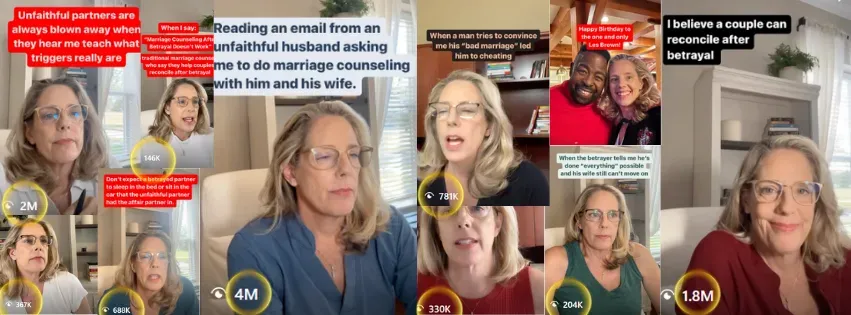
7M+ Views Across Social Media
20,000+ People Supported Through Beth's Programs and Resources
Beth Fischer, M.Ed. is the creator of The Betrayal Trauma Healing Method® and The Integrity Journey® that have guided more than 20,000 individuals toward lasting recovery from betrayal trauma after infidelity. What began as one course has grown a global movement reaching millions through her courses and social media channels.
Clients describe Beth’s social media channels as “a lifeline” after infidelity. From practical tools that help calm an overwhelmed nervous system to direct reminders that betrayal trauma is real and not their fault, Beth’s message consistently stabilizes Betrayed Partners in their most vulnerable moments. Viewers often call her content a lifeline and return for support because they feel understood, not minimized.
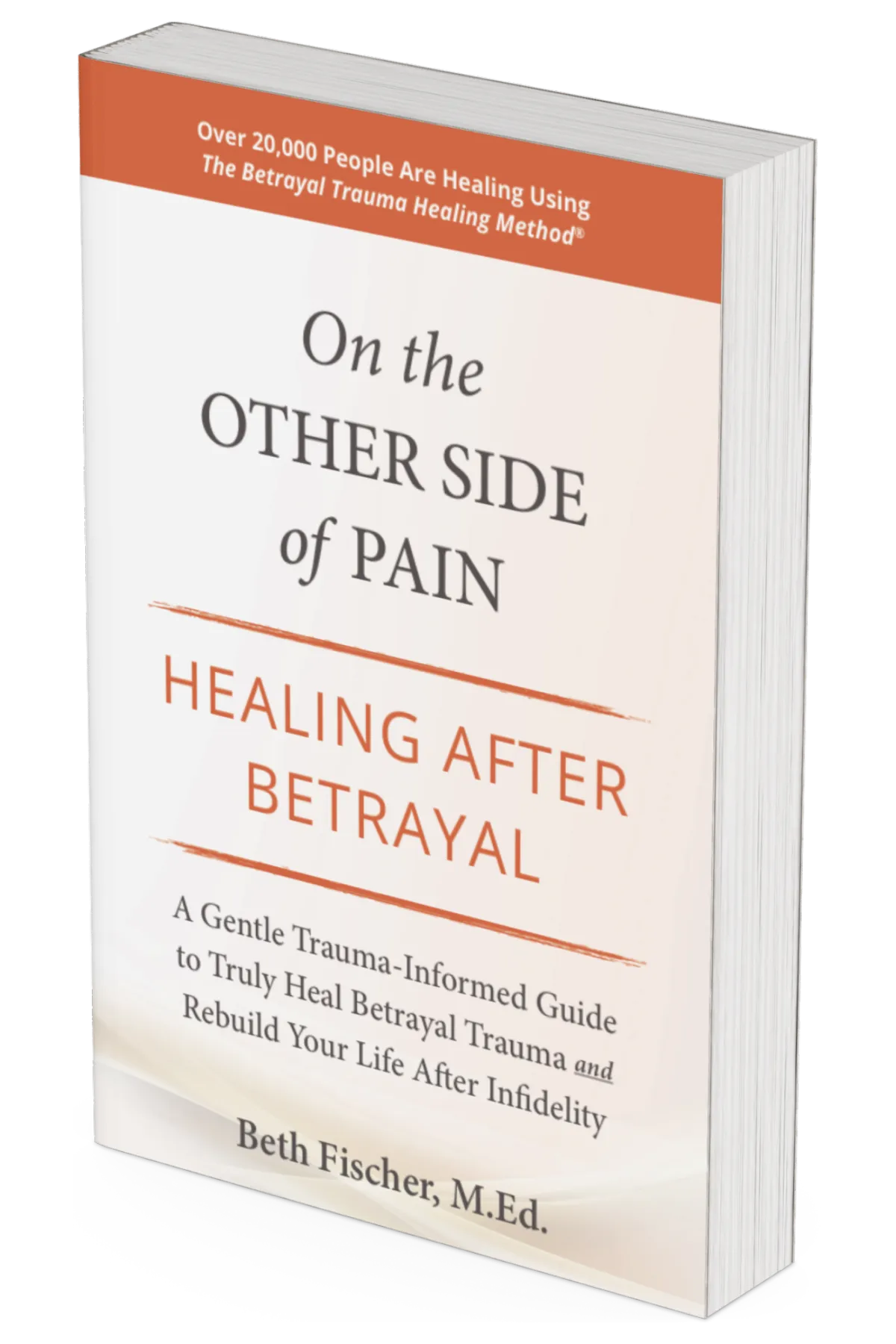
On The Other Side of Pain
Healing After Betrayal
Her book, On the Other Side of Pain: Healing After Betrayal, is an Amazon #1 New Release.
It instantly resonated because it names what Betrayed Partners are experiencing in real time. The panic. The triggers. The self-doubt. And the pressure to forgive or “fix the marriage” before feeling safe.
Beth offers a trauma-informed, individual-first path to healing after infidelity—one that focuses on healing the people involved before attempting to repair the relationship.
PRESS RELEASE
Marriage Counseling Is Failing Betrayed Partners.
One Trauma Expert Calls It Out in her New Book.
For decades, the advice after infidelity has been simple: save the marriage. Beth Fischer, M.Ed., says that advice is not just outdated, it’s also psychologically damaging to the Betrayed Partner.
In her book, On the Other Side of Pain: Healing After Betrayal, an Amazon #1 New Release, Beth challenges the “reconciliation-first” model that dominates most marriage counseling. She argues that prioritizing the relationship over the mental health of the Betrayed Partner retraumatizes the very person who was harmed.
“When you push forgiveness, communication, or ‘shared responsibility’ before stabilizing the nervous system, you deepen the traumatic injury,” Beth says.
In her book, Beth’s trauma-informed Betrayal Trauma Healing Method® flips the old, outdated script and advocates:
1. Heal the person first.
2. Stabilize the nervous system.
3. Restore self-trust and a sense of safety.
4. Then decide what happens to the relationship.
Since 2021, more than 20,000 individuals have sought out The Betrayal Trauma Method® and her Instagram posts have surpassed 7 million views. Fischer’s message resonates with so many because it names what many Betrayed Partners quietly feel but rarely hear acknowledged: betrayal trauma is real, it injures the nervous system, and “saving the marriage” should not come at the cost of your mental health.
Beth doesn’t speak from theory. She lived it.
When she sought traditional marriage counseling after her husband’s multiple affairs, she was told to “forgive and forget” and “move on” while she was still experiencing active trauma symptoms. Beth knows the sleepless nights, the hypervigilance, the triggers and panic that do not turn off. Her experience exposed a system that prioritizes preserving the relationship over protecting the injured betrayed partner.
So, she built something different.
Beth Fischer, M.Ed. isn’t just part of the conversation on betrayal trauma.
She is reshaping the conversation around infidelity recovery. Known for her unapologetic advocacy, she speaks boldly about the need for trauma-informed care so that Betrayed Partners are not retraumatized by the very therapies meant to help them.
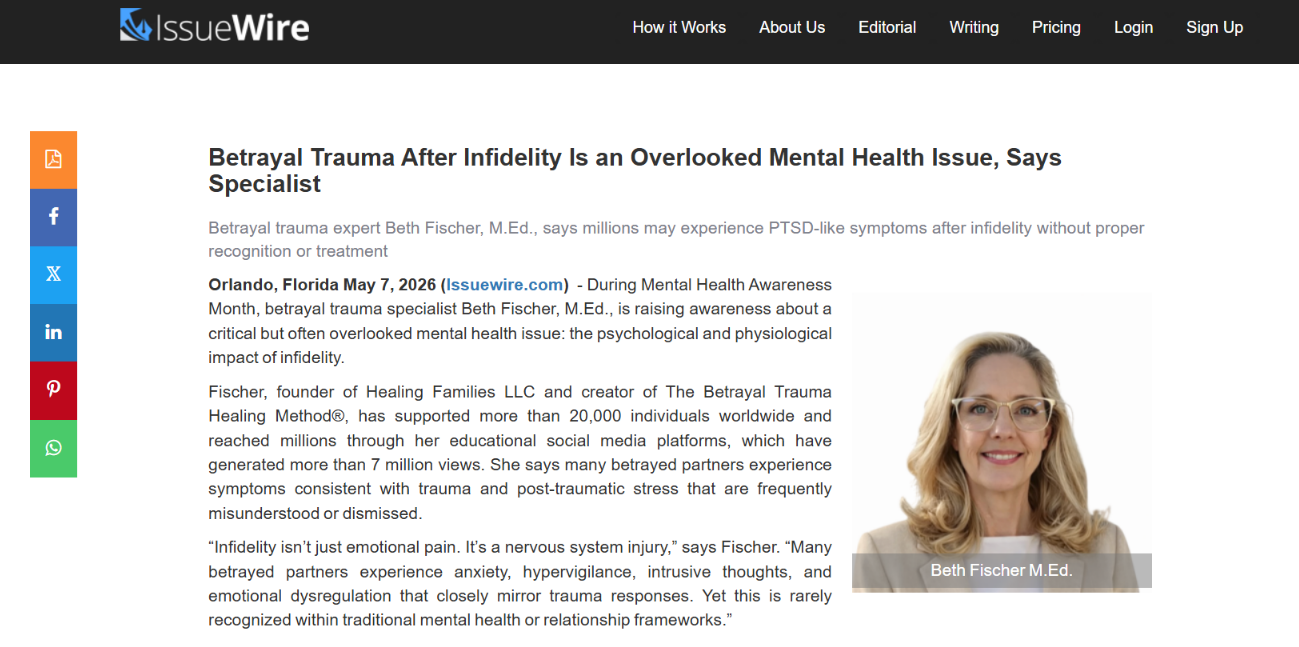
Betrayal Trauma After Infidelity Is an Overlooked Mental Health Issue
Betrayal Trauma After Infidelity Is a Real Mental Health Crisis, Not Just Heartbreak
Beth Fischer, M.Ed., founder of Healing Families LLC, reveals why infidelity is more than emotional pain—it's a nervous system injury. Betrayed Partners can experience PTSD-like symptoms that go unrecognized and untreated. This article explains why true healing must begin with safety, not forced forgiveness.
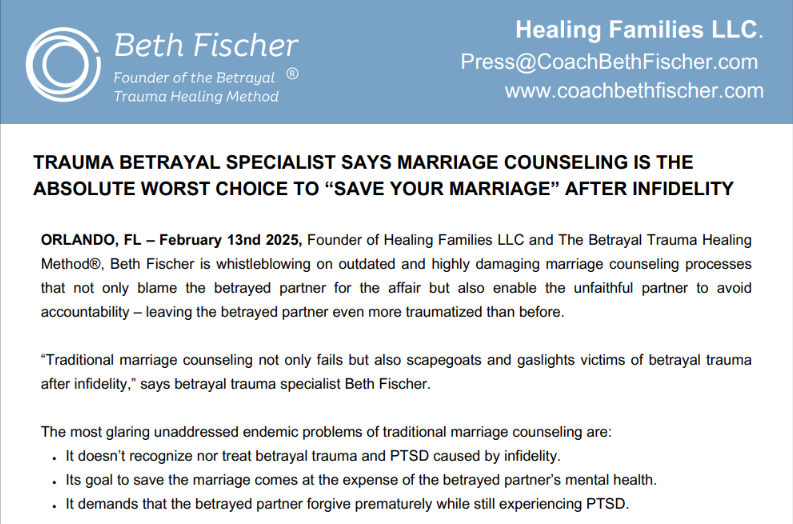
The Flaws In Marriage Counseling as it Ignores Betrayal Trauma
Why Traditional Marriage Counseling Fails Betrayed Partner
Beth Fischer, betrayal trauma expert and founder of the Betrayal Trauma Healing Method®, exposes how traditional marriage counseling can worsen the damage for Betrayed Partners. Instead of offering trauma-informed support, it frequently pressures them into premature forgiveness and lets the unfaithful partner avoid accountability. This article outlines the core flaws of outdated approaches—and offers a healing model that centers truth, individual growth, and real transformation.
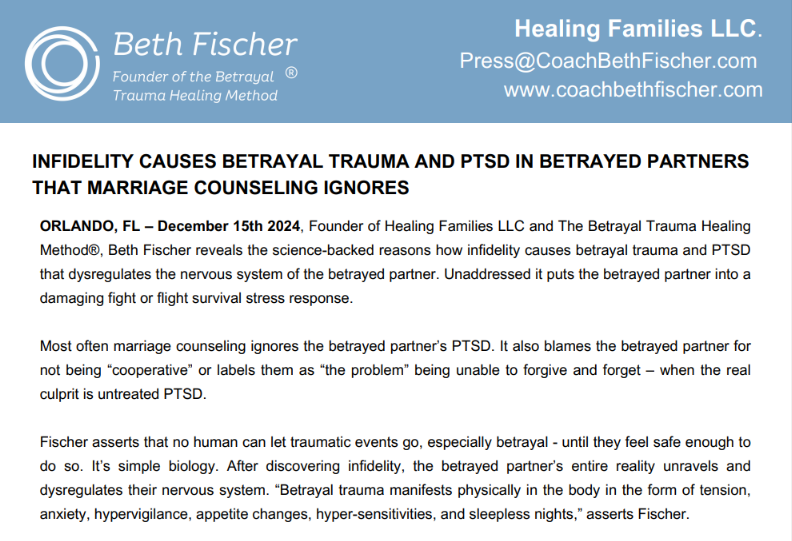
How Marriage Counseling Gaslights Betrayed Partners
Betrayal Trauma, PTSD and The Flaws in Marriage Counseling
Founder of Healing Families LLC and The Betrayal Trauma Healing Method®, Beth Fischer reveals how betrayal trauma creates PTSD-like symptoms in the betrayed partner—symptoms often overlooked in traditional marriage counseling. Without addressing this trauma, reconciliation efforts stall and both partners remain stuck in cycles of pain and misunderstanding. This article explains why true healing begins with nervous system safety—not forced forgiveness.
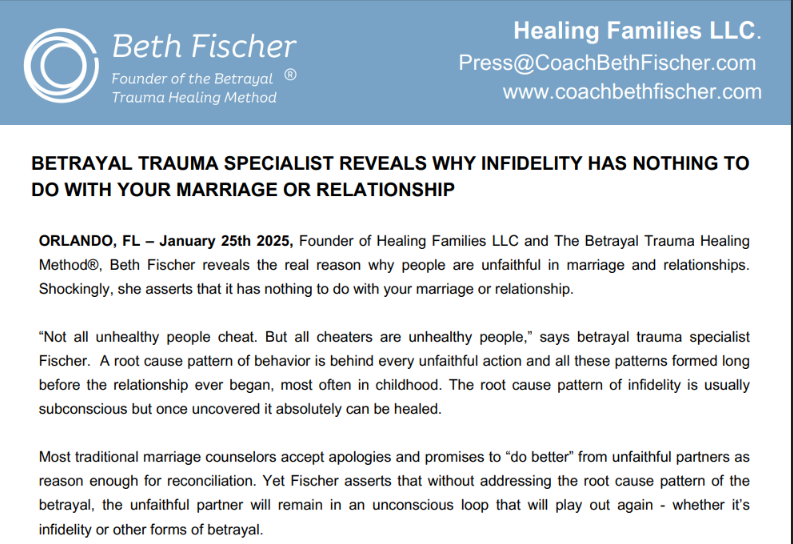
Why Infidelity And Betrayal Have Nothing to Do With Your Marriage
Why Infidelity Has Nothing To Do With Your Marriage
Betrayal trauma expert and founder of the Betrayal Trauma Healing Method®, Beth Fischer, challenges one of the most common misconceptions about infidelity—that it's caused by problems in the relationship. In this powerful article, she explains why betrayal is rooted in long-standing emotional patterns formed long before the marriage began. Without addressing the “why,” true healing and lasting change remain out of reach.
Beth Fischer is Reshaping the National Conversation Around Infidelity Recovery.
While many traditional approaches begin by focusing on repairing the relationship, Beth focuses on healing the individuals first. Her trauma-informed approach challenges reconciliation-first models that can cause further harm when individual healing has not yet occurred.
Beth’s Amazon #1 New Release, On the Other Side of Pain, offers an individual-first recovery framework that is gaining national attention.
Beth is a clear, confident, media-ready communicator who combines her lived experience as a Betrayed Partner with professional training in trauma recovery. She speaks about betrayal trauma, infidelity recovery, mental health, and the very different healing work required of betrayed and unfaithful partners. Beth offers practical, actionable insight while challenging conventional approaches to infidelity recovery in a way that is direct, informed, and accessible.
MEDIA SEGMENTS & TALKING POINTS
1. We’ve Been Asking the Wrong Question After Infidelity
For decades, infidelity recovery has focused on one question: “How do we save the marriage?”
Beth argues that this approach has the priorities backwards. The first question should be: “How do we stabilize and heal the injured Betrayed Partner?”
When reconciliation is prioritized over emotional safety, the Betrayed Partner can be retraumatized and pushed into decisions before they are ready.
2. Infidelity Can Create a Profound Trauma Response—Not Just a Relationship Crisis
Betrayal is more than a relationship crisis. It can trigger a profound trauma response in the nervous system.
Panic, hypervigilance, intrusive thoughts, emotional flooding, and sleeplessness are not simply overreactions. They can be normal responses to the shock and loss of safety caused by betrayal.
Before couples can work on communication or reconciliation, the trauma response needs to be understood and stabilized.
3. You Cannot Rebuild Trust While the Betrayed Partner Is in Survival Mode
Trust cannot be rebuilt while someone is still living in a state of fear and emotional survival.
Forgiveness, intimacy, shared responsibility, and reconciliation should not be demanded from an injured partner who does not yet feel safe.
Beth helps Betrayed Partners regain stability, clarity, and a sense of self before asking them to make decisions about the relationship.
4. Saving the Marriage Should Never Cost Someone Their Mental Health
Reconciliation should never come at the expense of the Betrayed Partner’s emotional wellbeing.
Real recovery begins with restoring safety, self-trust, and clarity. Once the Betrayed Partner becomes more grounded, they can make a conscious decision about the future of the relationship, whether that means rebuilding the marriage or choosing separation.
5. Accountability Is More Than an Apology
An apology alone does not repair betrayal. Beth teaches unfaithful partners to move beyond defensiveness, shame, excuses, and surface-level remorse toward genuine accountability and root-level change. Real repair requires more than remorse. It requires understanding WHAT happened, WHY the person became capable of betrayal, HOW those patterns operated inside the relationship, and what must change to become emotionally safe.
6. Why Traditional Marriage Counseling Can Miss the Trauma of Infidelity
Many traditional marriage counseling approaches focus on communication, conflict resolution, and relationship dynamics.
But those tools may not work when the Betrayed Partner’s nervous system is still in crisis.
Beth’s trauma-informed approach recognizes that infidelity recovery requires addressing the physiological and emotional impact of betrayal, not simply teaching couples how to communicate better.
7. Heal Individually Before Attempting to Heal the Relationship
After betrayal, both partners have individual work to do, but that work is very different. The Betrayed Partner needs support to regain stability, safety, clarity, and self-trust. The unfaithful partner needs to develop accountability, understand the root causes and patterns behind the betrayal, and learn how to become emotionally safe. Only after individual healing has begun can two healthier people determine whether there is a healthy relationship to rebuild.
8. Why Infidelity Recovery Needs a Trauma-Informed Approach
Beth is part of a broader shift in how betrayal recovery is understood: moving away from “save the marriage at all costs” and toward healing the injured partner first.
Her work offers therapists, coaches, and couples a trauma-informed framework for understanding what happens after betrayal and creating space for genuine healing, accountability, and informed decisions about the future.
Beth Knows Betrayal Trauma
Both an expert in betrayal trauma recovery and a survivor herself, Beth endured the panic, sleepless nights, and relentless triggers that so many Betrayed Partners know too well. Traditional marriage counseling only deepened her pain, as she was demanded to “let it go” while still experiencing PTSD symptoms of betrayal trauma after her husband’s multiple affairs.
Combining her personal story and expertise, Beth created the Betrayal Trauma Healing Method® and the Integrity Journey®, which has since guided more than 20,000 people toward lasting recovery. What began as a single free online course grew into a worldwide movement, reaching millions through social media and viral posts on Instagram and YouTube. Today, Beth is an author, educator, speaker, and podcast guest whose work reaches people around the world.
REQUEST AN INTERVIEW
SPEAKING & INTERVIEW TOPICS
PODCAST EPISODES
Imperfect Love
Hosted by Dr. Carla Manly
Episode Title: Beyond Betrayal: Untangling the Post-Infidelity Trauma Loop
Beth Fischer joins Dr. Carla Manly for an in-depth conversation about the trauma of betrayal and what it truly takes to heal after infidelity. Beth explains why betrayed partners often become stuck in survival mode, why rebuilding self-trust must come before trusting a partner again, and why couples cannot simply return to the relationship they had before betrayal. She also shares her approach to reconciliation, including the “what, why, and how” that unfaithful partners must address to create meaningful change and rebuild safety.

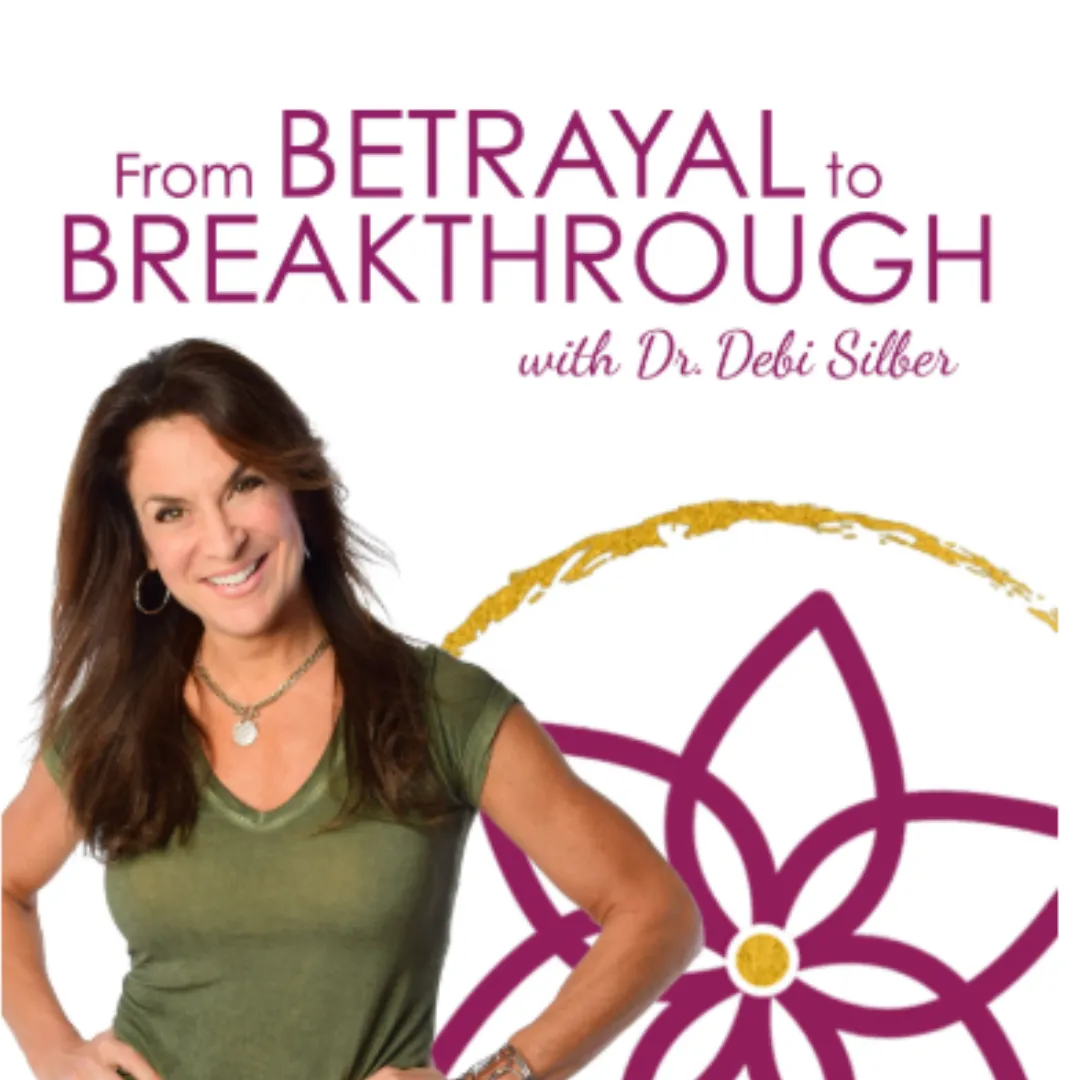
From Betrayal to Breakthrough
Hosted by Dr. Debi Silber
Episode Title: Why Marriage Counseling Doesn't Work After Betrayal
Summary: Beth Fischer shares her personal journey through betrayal trauma and explains why traditional marriage counseling may not be effective in such situations. She emphasizes the importance of finding the right support and community for healing.

Living Your Legacy
Hosted by Rudy Mawer
Episode Title: How Betrayal Trauma Became a Movement That Heals Marriages
Beth Fischer shares her deeply personal journey through betrayal and how her experience led her to become a betrayal trauma specialist. She discusses why traditional marriage counseling may not be enough after infidelity, how neuroscience and nervous system healing can transform recovery, and why healing the individual must come before rebuilding the relationship. Beth also shares how she turned her greatest personal crisis into a mission that has helped more than 20,000 people worldwide.

How I Discovered My Gift
Hosted by David D. Simons
Title: Beth's Journey to Overcoming Betrayal Trauma and Reclaiming Love and Trust After Infidelity
Summary: Beth Fisher discusses her personal and professional journey in guiding couples through healing from infidelity. She emphasizes the importance of trust, understanding, and mutual growth in rebuilding relationships.
From Betrayal to Breakthrough
Hosted by Dr. Debi Silber
Episode Title: Why Marriage Counseling Doesn't Work After Betrayal
Summary: Beth Fischer shares her personal journey through betrayal trauma and explains why traditional marriage counseling may not be effective in such situations. She emphasizes the importance of finding the right support and community for healing.
Bomb Mom
Hosted by Melissa Vogel
Title: Navigating the Landscape of Betrayal with Beth Fischer
Summary: Beth Fischer shares her personal journey through betrayal trauma and explains why traditional marriage counseling may not be effective in such situations. She emphasizes the importance of finding the right support and community for healing.
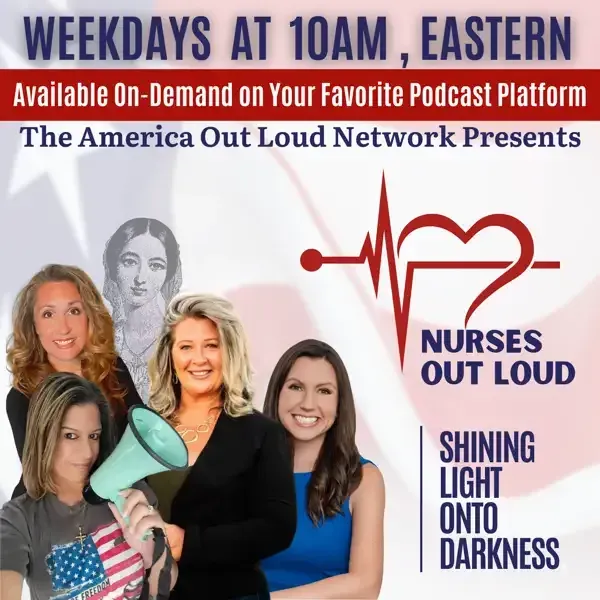
Nurses Out Loud
Hosted by Kimberly Overton BSN, RN
Episode Title: An Honest Conversation About Infidelity and Betrayal Recovery
Summary: Beth dives into the devastating impact of betrayal, why traditional counseling often falls short, and what it truly takes to heal. In this powerful conversation with Nurse Michele, Beth shares deep insights and practical strategies to help you rebuild trust, find clarity, and reclaim your life after infidelity.
How I Discovered My Grit
Hosted by David Simons
Title: Beth's Journey to Overcoming Betrayal Trauma and Reclaiming Love and Trust After Infidelity
Summary: Beth Fisher discusses her personal and professional journey in guiding couples through healing from infidelity. She emphasizes the importance of trust, understanding, and mutual growth in rebuilding relationships.
PODCAST EPISODES
Imperfect Love
Hosted by Dr. Carla Manly
Episode Title: Beyond Betrayal: Untangling the Post-Infidelity Trauma Loop
Beth Fischer joins Dr. Carla Manly for an in-depth conversation about the trauma of betrayal and what it truly takes to heal after infidelity. Beth explains why betrayed partners often become stuck in survival mode, why rebuilding self-trust must come before trusting a partner again, and why couples cannot simply return to the relationship they had before betrayal. She also shares her approach to reconciliation, including the “what, why, and how” that unfaithful partners must address to create meaningful change and rebuild safety.
From Betrayal to Breakthrough
Hosted by Dr. Debi Silber
Episode Title: Why Marriage Counseling Doesn't Work After Betrayal
Summary: Beth Fischer shares her personal journey through betrayal trauma and explains why traditional marriage counseling may not be effective in such situations. She emphasizes the importance of finding the right support and community for healing.
From Betrayal to Breakthrough
Hosted by Dr. Debi Silber
Episode Title: Why Marriage Counseling Doesn't Work After Betrayal
Summary: Beth Fischer shares her personal journey through betrayal trauma and explains why traditional marriage counseling may not be effective in such situations. She emphasizes the importance of finding the right support and community for healing.
Living Your Legacy
Hosted by Rudy Mawer
Episode Title: How Betrayal Trauma Became a Movement That Heals Marriages
Beth Fischer shares her deeply personal journey through betrayal and how her experience led her to become a betrayal trauma specialist. She discusses why traditional marriage counseling may not be enough after infidelity, how neuroscience and nervous system healing can transform recovery, and why healing the individual must come before rebuilding the relationship. Beth also shares how she turned her greatest personal crisis into a mission that has helped more than 20,000 people worldwide.
How I Discovered My Grit
Hosted by David Simons
Title: Beth's Journey to Overcoming Betrayal Trauma and Reclaiming Love and Trust After Infidelity
Summary: Beth Fisher discusses her personal and professional journey in guiding couples through healing from infidelity. She emphasizes the importance of trust, understanding, and mutual growth in rebuilding relationships.
Bomb Mom
Hosted by Melissa Vogel
Title: Navigating the Landscape of Betrayal with Beth Fischer
Summary: Beth Fischer shares her personal journey through betrayal trauma and explains why traditional marriage counseling may not be effective in such situations. She emphasizes the importance of finding the right support and community for healing.
Nurses Out Loud
Hosted by Kimberly Overton BSN, RN
Episode Title: An Honest Conversation About Infidelity and Betrayal Recovery
Summary: Beth dives into the devastating impact of betrayal, why traditional counseling often falls short, and what it truly takes to heal. In this powerful conversation with Nurse Michele, Beth shares deep insights and practical strategies to help you rebuild trust, find clarity, and reclaim your life after infidelity.
PODCAST EPISODES
Imperfect Love
Hosted by Dr. Carla Manly
Episode Title: Beyond Betrayal: Untangling the Post-Infidelity Trauma Loop
Beth Fischer joins Dr. Carla Manly for an in-depth conversation about the trauma of betrayal and what it truly takes to heal after infidelity. Beth explains why Betrayed Partners often become stuck in survival mode, why rebuilding self-trust must come before trusting a partner again, and why couples cannot simply return to the relationship they had before betrayal. She also shares her approach to reconciliation, including the “what, why, and how” that unfaithful partners must address to create meaningful change and rebuild safety.
From Betrayal to Breakthrough
Hosted by Dr. Debi Silber
Episode Title: Why Marriage Counseling Doesn't Work After Betrayal
Summary: Beth Fischer shares her personal journey through betrayal trauma and explains why traditional marriage counseling may not be effective in such situations. She emphasizes the importance of finding the right support and community for healing.
Living Your Legacy
Hosted by Rudy Mawer
Episode Title: How Betrayal Trauma Became a Movement That Heals Marriages
Beth Fischer shares her deeply personal journey through betrayal and how her experience led her to become a betrayal trauma Expert. She discusses why traditional marriage counseling may not be enough after infidelity, how neuroscience and nervous system healing can transform recovery, and why healing the individual must come before rebuilding the relationship. Beth also shares how she turned her greatest personal crisis into a mission that has helped more than 20,000 people worldwide.
How I Discovered My Gift
Hosted by David D. Simons
Title: Beth's Journey to Overcoming Betrayal Trauma and Reclaiming Love and Trust After Infidelity
Summary: Beth Fischer discusses her personal and professional journey in helping betrayed and unfaithful partners heal individually after infidelity. She explains why healing the individuals must come before attempting to rebuild the relationship and why both partners have different work to do after betrayal.
From Betrayal to Breakthrough
Hosted by Dr. Debi Silber
Episode Title: Why Marriage Counseling Doesn't Work After Betrayal
Summary: Beth Fischer shares her personal journey through betrayal trauma and explains why traditional marriage counseling may not be effective in such situations. She emphasizes the importance of finding the right support and community for healing.
Bomb Mom
Hosted by Melissa Vogel
Title: Navigating the Landscape of Betrayal with Beth Fischer
Summary: Beth Fischer shares her personal journey through betrayal trauma and explains why traditional marriage counseling can be harmful when betrayal trauma has not first been addressed. She emphasizes the importance of finding the right support and community for healing.
Nurses Out Loud
Hosted by Kimberly Overton BSN, RN
Episode Title: An Honest Conversation About Infidelity and Betrayal Recovery
Summary: Beth dives into the devastating impact of betrayal, why traditional marriage counseling can cause further harm when betrayal trauma has not first been addressed, and what it truly takes to heal. In this powerful conversation with Nurse Michele, Beth shares deep insights and practical strategies to help you rebuild trust, find clarity, and reclaim your life after infidelity.
How I Discovered My Grit
Hosted by David Simons
Title: Beth's Journey to Overcoming Betrayal Trauma and Reclaiming Love and Trust After Infidelity
Summary: Beth Fisher discusses her personal and professional journey in guiding couples through healing from infidelity. She emphasizes the importance of trust, understanding, and mutual growth in rebuilding relationships.
BETH'S MEDIA ROOM
Here you’ll find everything you need to feature Beth Fischer, a betrayal trauma recovery expert, author, and
creator of the Betrayal Trauma Healing Method® and the Integrity Journey®.
Beth is available for interviews, speaking engagements, expert commentary, and podcast features. Beth brings both professional expertise and lived experience to interviews, translating complex concepts about betrayal trauma, the nervous system, accountability, and recovery into language audiences can immediately understand.
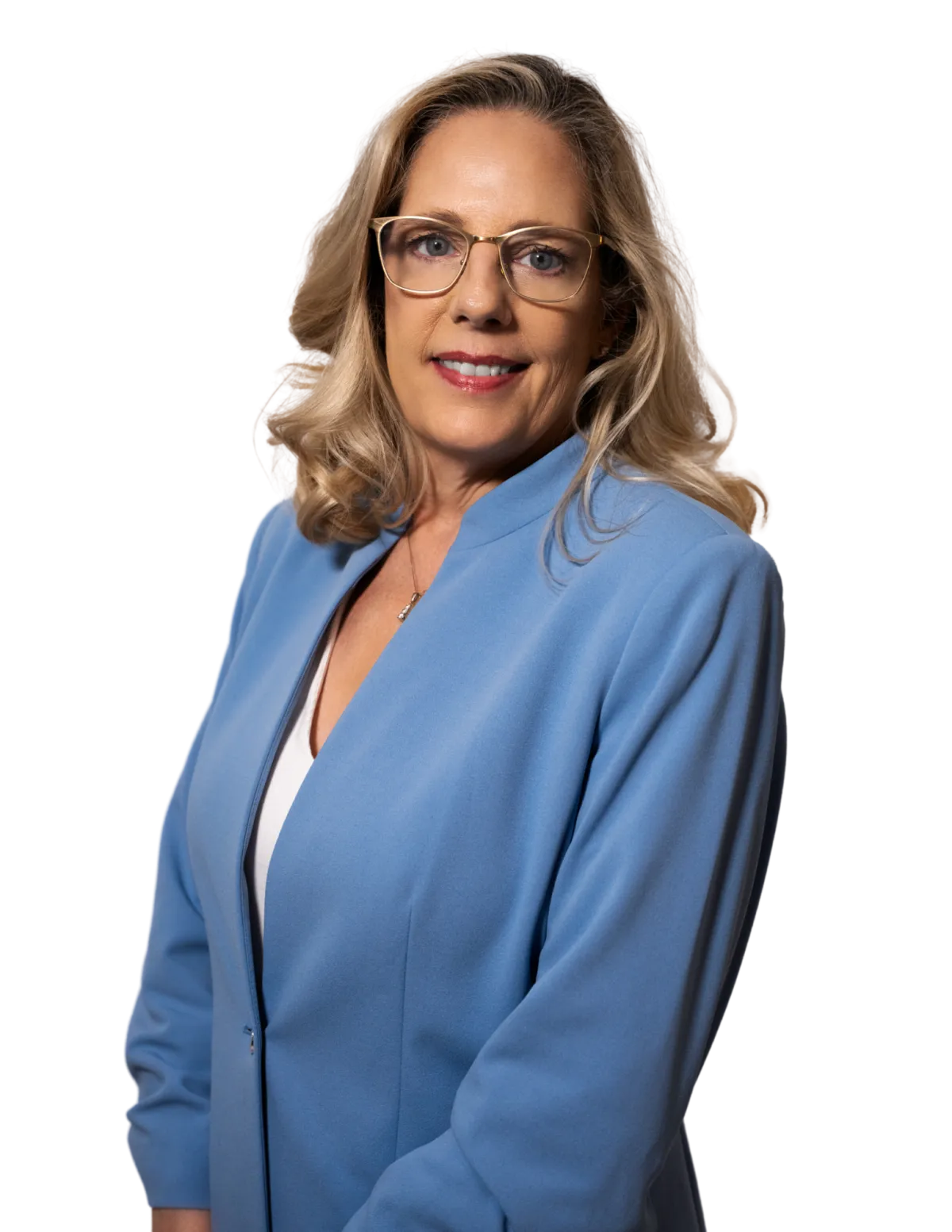
Beth Fischer’s Official Press Kit:
Everything you need to feature Beth -bios, certifications, course overviews, and contact info, all in one file.
Beth Fischer is a betrayal trauma recovery expert, author, and creator of the Betrayal Trauma Healing Method®. She is available for interviews, speaking engagements, expert commentary, and podcast features. If you're working on a story about infidelity, PTSD, nervous system regulation, or rebuilding relationships after betrayal, this press kit gives you everything you need in one place.
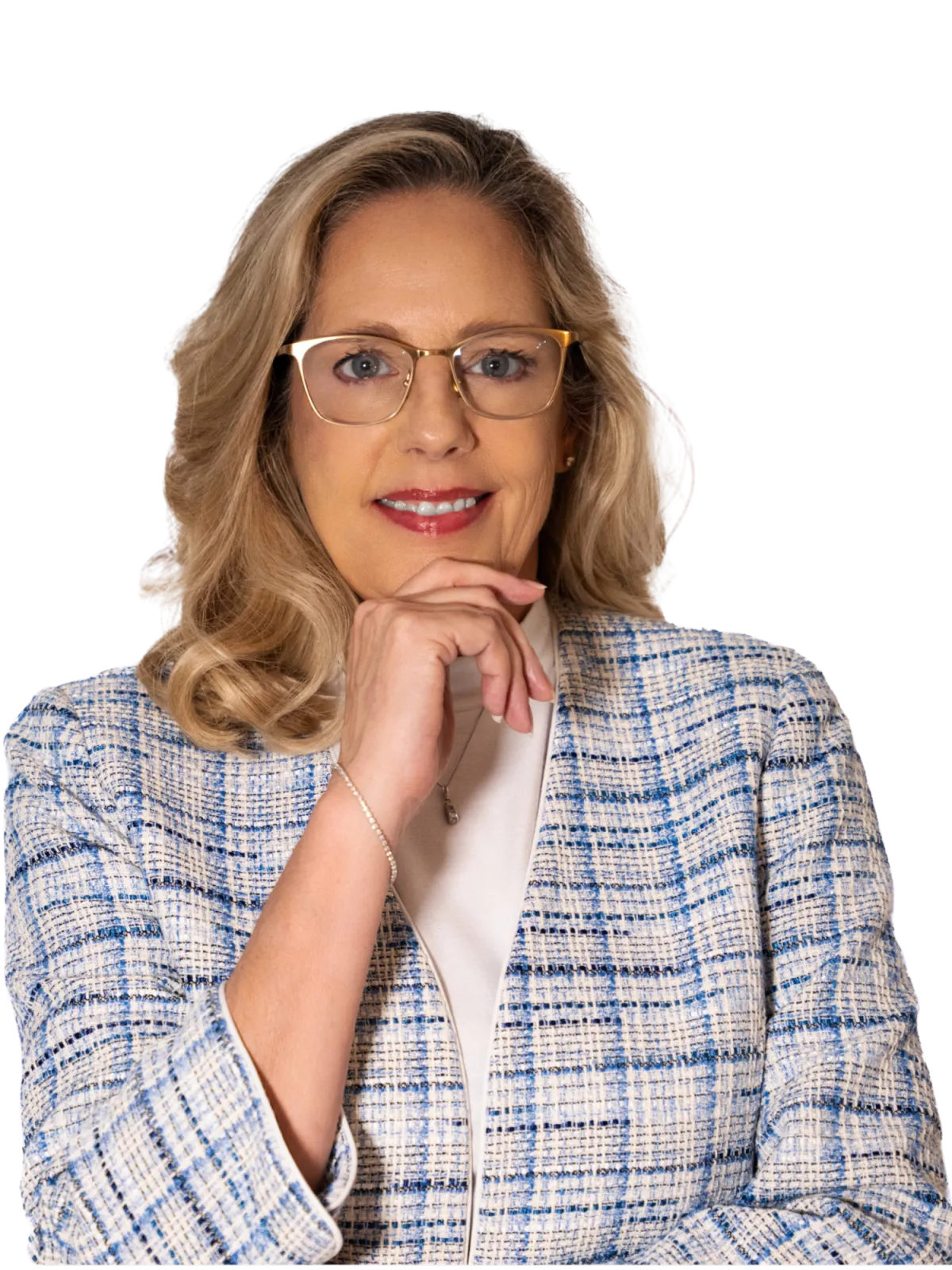
APPROVED IMAGES

SPEAKING AND INTERVIEW TOPICS
Why Marriage Counseling Often Fails Betrayed Partners
How traditional models ignore trauma and even gaslight the person most hurt.
Why People Cheat: Looking Beyond Problems in the Marriage
Why betrayal requires looking beyond relationship problems to understand the deeper individual patterns and root causes behind infidelity
The Biology of Betrayal: What Infidelity Can Do to the Brain and Nervous System
A trauma-informed look at PTSD, nervous system dysregulation, and healing.
What Unfaithful Partners Can Do to Help Rebuild Trust
Moving from shame and defensiveness toward accountability, empathy, transparency, and meaningful change.
The difference between forgiveness and reconciliation and why it matters
Forgiveness and reconciliation are not the same process. Reconciliation requires mutual participation, demonstrated change, rebuilt safety, and trust over time.
MEDIA AND INTERVIEW REQUESTS
For interviews, speaking engagements, podcast appearances, or media features, please reach out via email or
text. Response time is typically within 24 hours on business days.
Beth Fischer
Founder, Healing Families LLC
407-315-1896
www.healingwithbeth.com

Education Comes First
Each Heals Individually
Personal Accountability
Independently Healthy
Email: [email protected]
Copyright 2026. Healing Families LLC. All rights reserved.
Disclaimer: The information provided in all 1:1 sessions, online videos, masterclasses, and coaching programs are for educational and informational purposes only. Results mentioned or implied are not typical and may vary based on individual effort, commitment, and circumstances. True transformation and positive life changes can only be achieved through dedicated implementation of the strategies and techniques provided in any session and/or program. The success of your experience when working with Beth Fischer and all affiliates of Healing Families LLC is ultimately dependent on your willingness to actively participate and apply the guidance provided. Healing Families LLC and its representatives and affiliates are not responsible for any outcomes or consequences resulting from your participation in any sessions or programs.